Oral Health
Looking after your child’s mouth keeps it clean, healthy and free from pain. When teeth and gums are well cared for, your child can eat, talk and smile with confidence — and the adult teeth growing in behind them get the best possible start.
This page covers what you need to know at every stage: from the first wobbly tooth coming through, to brushing routines, to spotting tooth decay early, to where to go when something needs a dentist’s eye.
Why oral health matters
The everyday stuff
Caring for your child’s teeth at home
From first teeth to first dentist visit — the small daily things that make the biggest difference.

The first teeth
Teething
First teeth usually appear between 5 and 7 months — bottom incisors first, then top incisors, then molars and canines. By around 2½ years, most children have all 20 baby teeth.
Some teeth come through with no fuss; others bring a few signs:
* Red, sore gums
* One flushed cheek
* Ear rubbing
* Extra dribbling
* Lots of chewing on things
* Being more unsettled than usual
To help, offer something safe to chew like a teething ring. Teething gels don’t usually help — if you do use one, make sure it’s baby-safe and sugar-free. Sugar-free paracetamol or ibuprofen can be given for babies over 3 months.
WORTH KNOWING. Teething doesn’t cause fever or diarrhoea. If your baby seems unwell, see a doctor.
Twice a day, every day
Toothbrushing
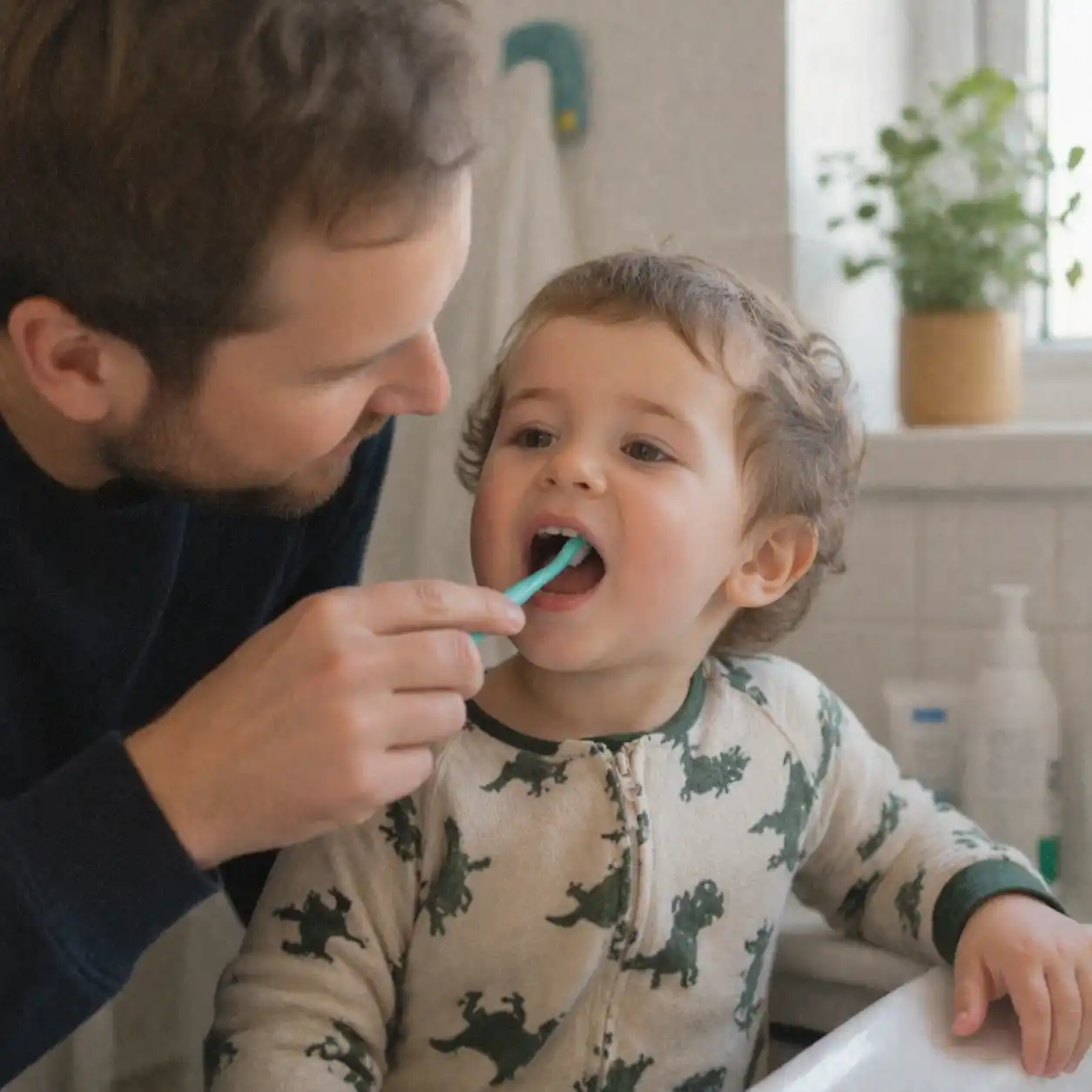
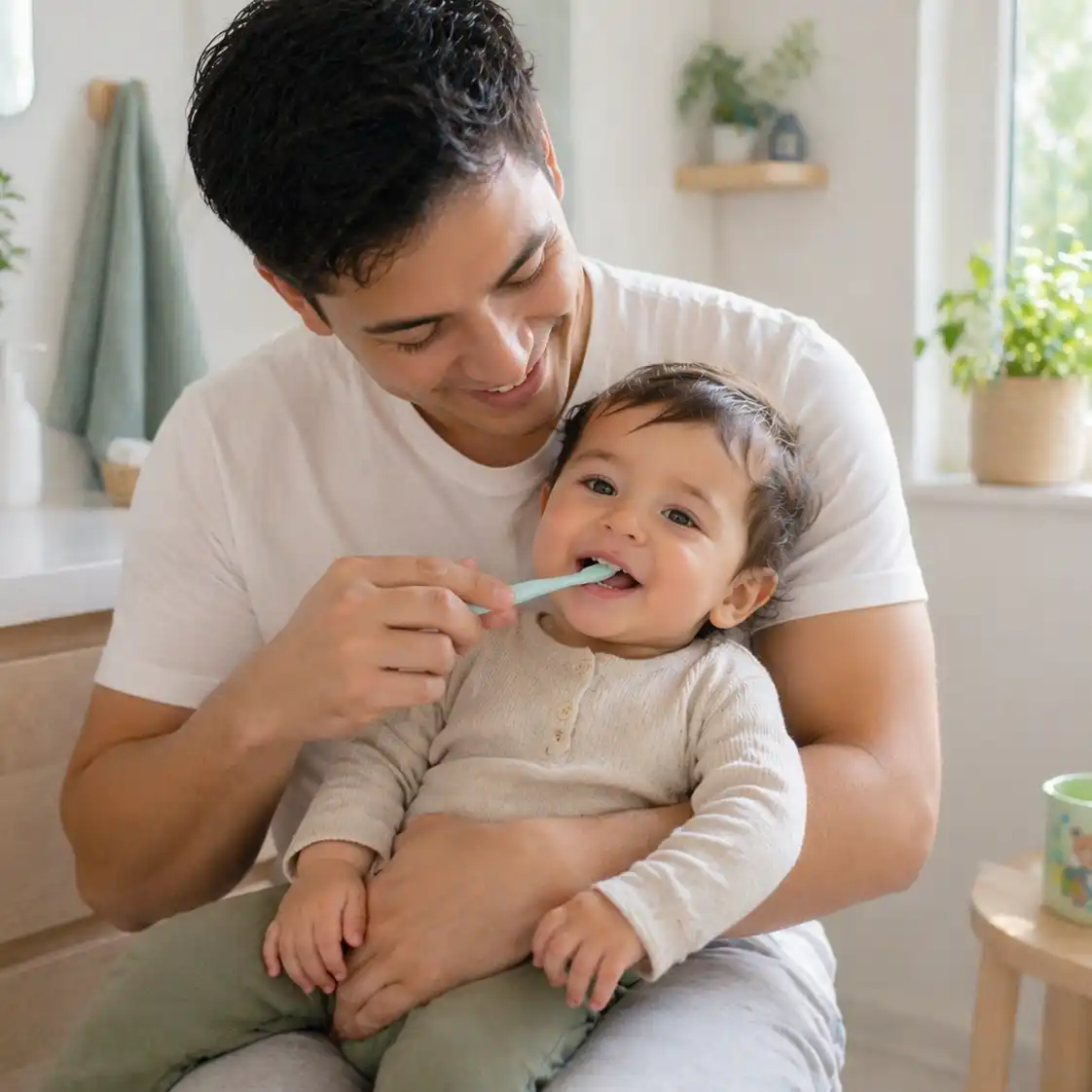
Start brushing as soon as the first tooth appears. Sit your baby on your knee with their head resting against your chest — much easier than facing them.
Brush for about 2 minutes, last thing at night and at one other time during the day. Build it into the daily routine — after breakfast and before bed works well. Use a small-headed brush with soft to medium bristles. Clean every tooth and along the gumline.
Parents should brush — or supervise — until children are at least 7.
HOW MUCH TOOTHPASTE? Use fluoride toothpaste — check the label for at least 1450ppm fluoride. Most supermarket brands are fine.
* Under 3 years: just a tiny smear
* Ages 3–6: a pea-sized amount
SPIT, DON’T RINSE. After brushing, don’t rinse — rinsing washes away the fluoride that protects your child’s teeth.
The sugar story
Tooth decay
When sugar sits in the mouth, it feeds bacteria that produce acid — and acid eats holes in teeth. The good news: a few simple habits make a big difference.
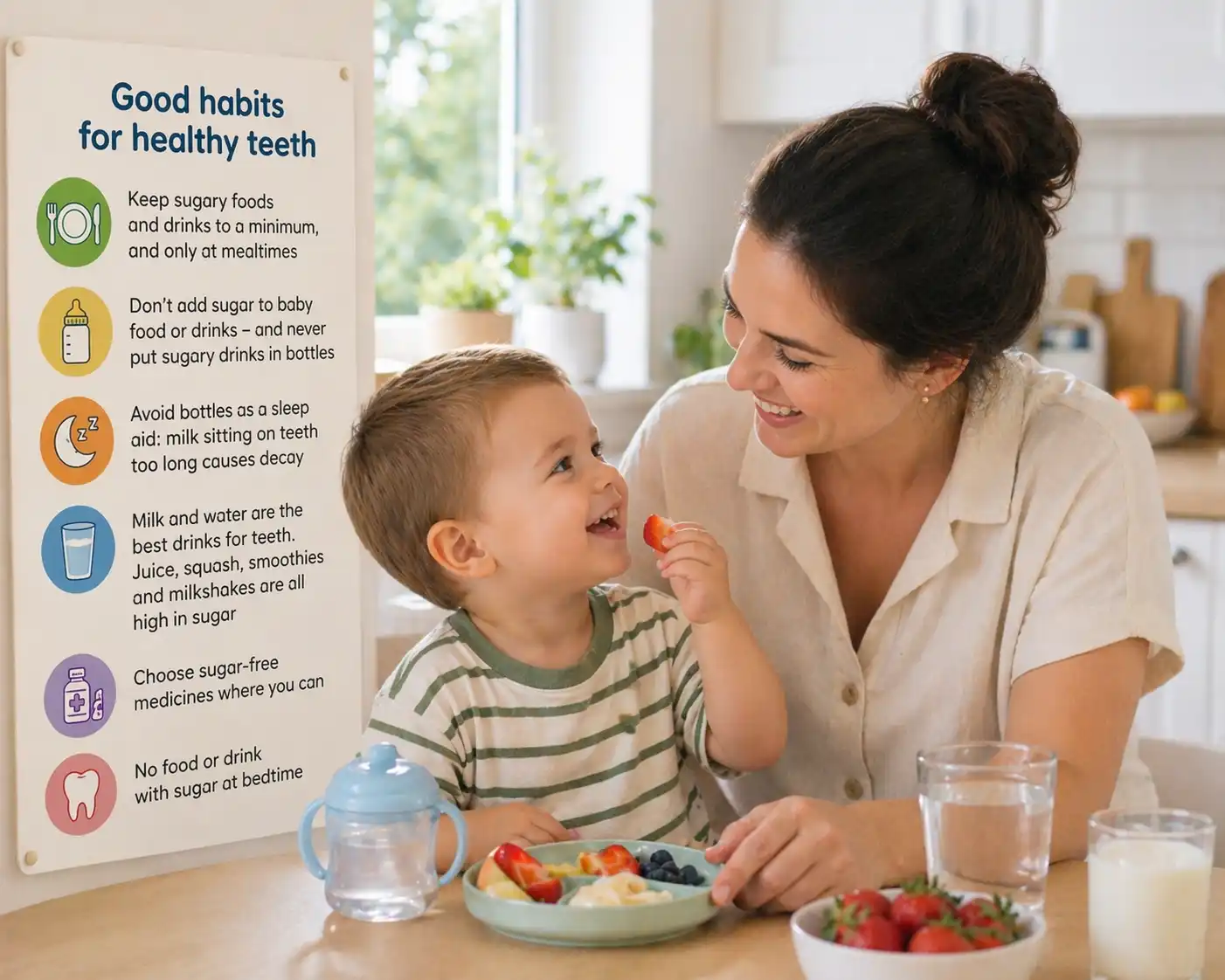
* Keep sugary foods and drinks to a minimum, and only at mealtimes
* Don’t add sugar to baby food or drinks — and never put sugary drinks in bottles
* Avoid bottles as a sleep aid: milk sitting on teeth too long causes decay
* Milk and water are the best drinks for teeth. Juice, squash, smoothies and milkshakes are all high in sugar
* Choose sugar-free medicines where you can
* No food or drink with sugar at bedtime
SUGAR IN DISGUISE. On labels, sugar hides under names like glucose, fructose, syrup, honey, and even “organic sugar” — it’s all harmful to teeth. If it’s near the top of the ingredients list, it’s a lot.
Comfort habits
Dummies and thumb sucking
It’s fine to give your baby a dummy — but try to stop using it after they turn 1. Long-term dummy use or thumb sucking can affect how teeth grow and even cause a gap between top and bottom teeth. It can also slow down speech development.
Where you can, try to avoid your child running around, talking or making sounds with a dummy or thumb in their mouth.
NEVER DO THIS. Never dip a dummy in anything sweet — sugar, jam, honey. It causes tooth decay almost straight away.

Professional check-ups
Visiting the dentist
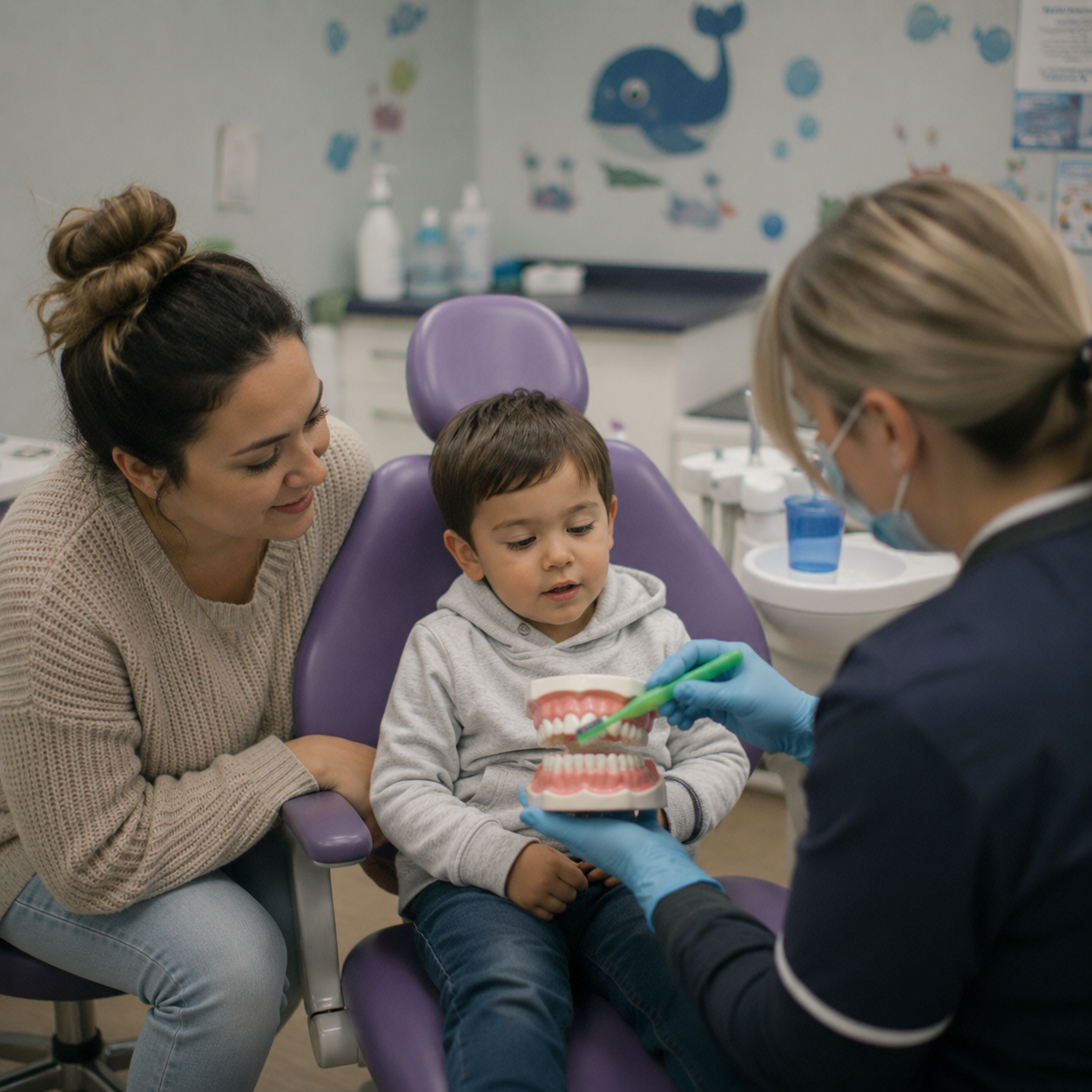
Register your child early — check-ups can start as soon as the first tooth appears. It helps them get used to the dentist and makes future visits much easier.
NHS dental care is free for children, pregnant mums, and for 12 months after birth and for some families on certain benefits. Children should have a check-up at least once a year.
When something’s wrong
Where to go for help
If your child has tooth pain, swelling or a mouth injury, here’s where to go — in order of urgency.